
Non-Kinetic Anti-Drone Systems- The Silent Revolution
Table of Contents

The Invisible Attack: The Present and Future of Non-Kinetic Anti-Drone Systems
Drones, once a novelty, are now a ubiquitous feature of our skies. From delivering packages to capturing stunning aerial photography, their applications are vast. However, this proliferation has brought a shadow: the growing threat of their misuse for smuggling, espionage, or even hostile attacks. In response, a sophisticated new field of defense has emerged—Counter-Unmanned Aerial Systems (C-UAS).
While one might imagine a sky filled with interceptor drones physically knocking threats out of the air, the most promising and rapidly advancing frontier in drone defense is far more subtle. It’s the world of non-kinetic engagement, a suite of technologies designed to neutralize drones without firing a single projectile. This article delves into the current state of these “soft-kill” systems and explores the exciting, high-tech future that awaits.
Defining the Engagement: Kinetic vs. Non-Kinetic Anti-Drone Systems
At its core, C-UAS technology is divided into two main approaches: kinetic and non-kinetic.
- Kinetic solutions are physical. They involve using force to disrupt or destroy a drone (idga.org). Think of projectiles, interceptor drones that ram into targets, or nets that entangle rotors (anvil.so). While direct, these methods carry an inherent risk of collateral damage from falling debris, making them less than ideal for urban or crowded environments (airsight.com).
- Non-kinetic solutions are electronic. Instead of physical impact, they neutralize a drone by targeting its internal systems (forbes.com). By disrupting communication, navigation, or control systems, these methods aim to disable the threat subtly and safely. This focus on electronic disruption makes them a preferred choice for sensitive areas where safety is paramount.
Powerful Silence: Technologies in Non-Kinetic Anti-Drone Systems
The world of non-kinetic defense is not one-size-fits-all. It comprises several distinct technologies, each with unique strengths.
Radio Frequency (RF) Jamming
This is one of the most common Non-Kinetic Anti-Drone Systems. Jammers work by blasting powerful electromagnetic “noise” at the radio frequencies drones use to communicate with their operators (typically 2.4GHz or 5.8GHz) (airsight.com). This flood of noise effectively drowns out the operator’s commands. Cut off from its pilot, a drone’s pre-programmed emergency procedure usually kicks in, forcing it to land on the spot or return to its launch point. Companies like DroneShield offer powerful jamming devices, such as the DroneCannon, which can disrupt multiple drones simultaneously, making them effective against swarm attacks (droneshield.com).
High-Power Microwaves (HPM)
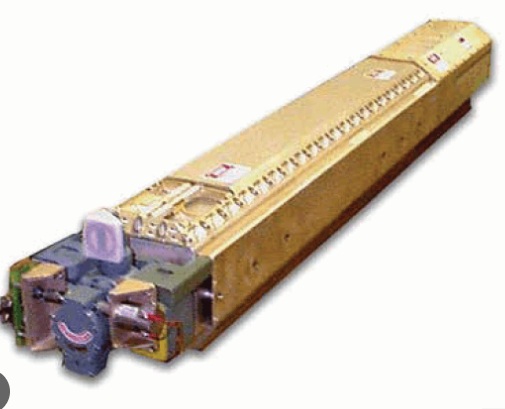
HPM in Non-Kinetic Anti-Drone Systems are a more powerful form of electronic attack. They generate a focused beam or a wide burst of intense microwave energy—an electromagnetic pulse (EMP)—that can overload and fry a drone’s delicate internal circuitry (robinradar.com). The ability of HPMs to affect a broad area makes them a promising tool for defeating coordinated drone swarms, a growing concern for military planners (forbes.com).
High-Energy Lasers
Directed-energy weapons in Non-Kinetic Anti-Drone Systems, particularly lasers, represent the pinnacle of precision in non-kinetic defense. Operating at the speed of light, a high-energy laser can focus a powerful beam onto a drone, rapidly heating critical components like its camera, GPS module, or rotor attachments, causing them to fail (forbes.com). This surgical approach offers an almost instantaneous “kill” with minimal risk of collateral damage, as there are no projectiles to go astray.
RF Cyber Takeover: The Surgical Solution

Perhaps the most sophisticated Non-Kinetic Anti-Drone Systems is RF cyber takeover. Instead of just jamming signals, these systems actively hack the drone. They work by detecting and analyzing the drone’s communication protocol and then transmitting a precise signal to seize control from the hostile pilot (d-fendsolutions.com). Once in command, the defense system operator can safely guide the drone to a designated landing zone.
This technology is a game-changer because it is non-jamming and non-kinetic, offering a clean, controlled outcome. D-Fend Solutions’ EnforceAir system is a market leader, capable of detecting, locating, and taking over rogue drones without causing interference or collateral damage, preserving operational continuity in sensitive environments (enforceair.com). This approach not only neutralizes the threat but can also help locate the pilot (robinradar.com).
The Present Landscape: Adoption, Capabilities, and Challenges
Non-Kinetic Anti-Drone Systems are no longer theoretical. The U.S. Department of Homeland Security (DHS) and Department of Defense (DoD) are actively testing and integrating these solutions to defend critical infrastructure and public spaces (dhs.gov). The U.S. Army’s deployed LIDS (Low, slow, small, unmanned aircraft Integrated Defeat System) is a prime example of a layered defense, combining Raytheon’s KuRFS radar for detection with both kinetic and non-kinetic effectors like the Coyote drone interceptor (rtx.com).
However, the technology is not without its challenges.
- Limitations: Some systems, like lasers, require a clear line-of-sight, which can be difficult to maintain in complex urban environments (d-fendsolutions.com). RF jammers, while effective, can inadvertently disrupt friendly communications if not used carefully (startus-insights.com).
- Legal Hurdles: The use of jammers and spoofers is heavily restricted by law in many countries, including the United States, limiting their deployment to authorized federal agencies (airsight.com).
- The “No Silver Bullet” Reality: Experts agree that no single technology can defeat all drone threats. The most effective defense relies on a multi-layered system that integrates various detection methods (radar, RF sensing, acoustic) with a mix of kinetic and non-kinetic neutralization options (sentrycs.com).
The Future of Non-Kinetic Defense: Smarter, Smaller, and Seamless
The future of non-kinetic C-UAS is pointing towards more intelligent, integrated, and precise systems.
The Rise of AI and Automation
Artificial intelligence will play a pivotal role. AI-driven systems can analyze sensor data to distinguish a hostile drone from a bird, identify the specific drone model, and even automatically select the most effective countermeasure. French startup Cerbair’s Hydra platform, for example, uses RF analysis to automatically identify the correct frequency band for jamming, minimizing interference (startus-insights.com). This level of automation will be crucial for defending against fast-moving swarm attacks.
The Dominance of Cyber Takeover
The trend is clearly moving away from brute-force jamming towards the surgical precision of cyber takeover. A recent Booz Allen Hamilton report identified non-kinetic C-UAS, and specifically cyber takeover technology, as one of the top ten emerging technologies for defense and national security (d-fendsolutions.com). As these systems become smaller, more mobile, and require less power, their operational feasibility will expand from protecting large sites to securing mobile convoys and public events.
Integrated Defense Networks
Looking ahead, the goal is to network and fuse data from multiple sensors to create a single, comprehensive air picture (forbes.com). This “system of systems” approach, championed by companies like Northrop Grumman, allows an operator to use any sensor to detect a threat and the best effector—kinetic or non-kinetic—to neutralize it, ensuring a robust and adaptive defense against evolving drone capabilities (northropgrumman.com).
Conclusion
Non-kinetic anti-drone systems are at the heart of a technological revolution in airspace security. Moving beyond the collateral risks of kinetic force, these electronic solutions offer a safer, more precise, and increasingly intelligent way to counter aerial threats. While challenges around cost, regulation, and the ever-advancing nature of drone technology remain, the path forward is clear. The future of drone defense lies in integrated, AI-powered networks that favor the surgical precision of cyber takeover over the blunt force of jamming. As our skies become more crowded, these unseen shields will be more critical than ever in keeping us safe.